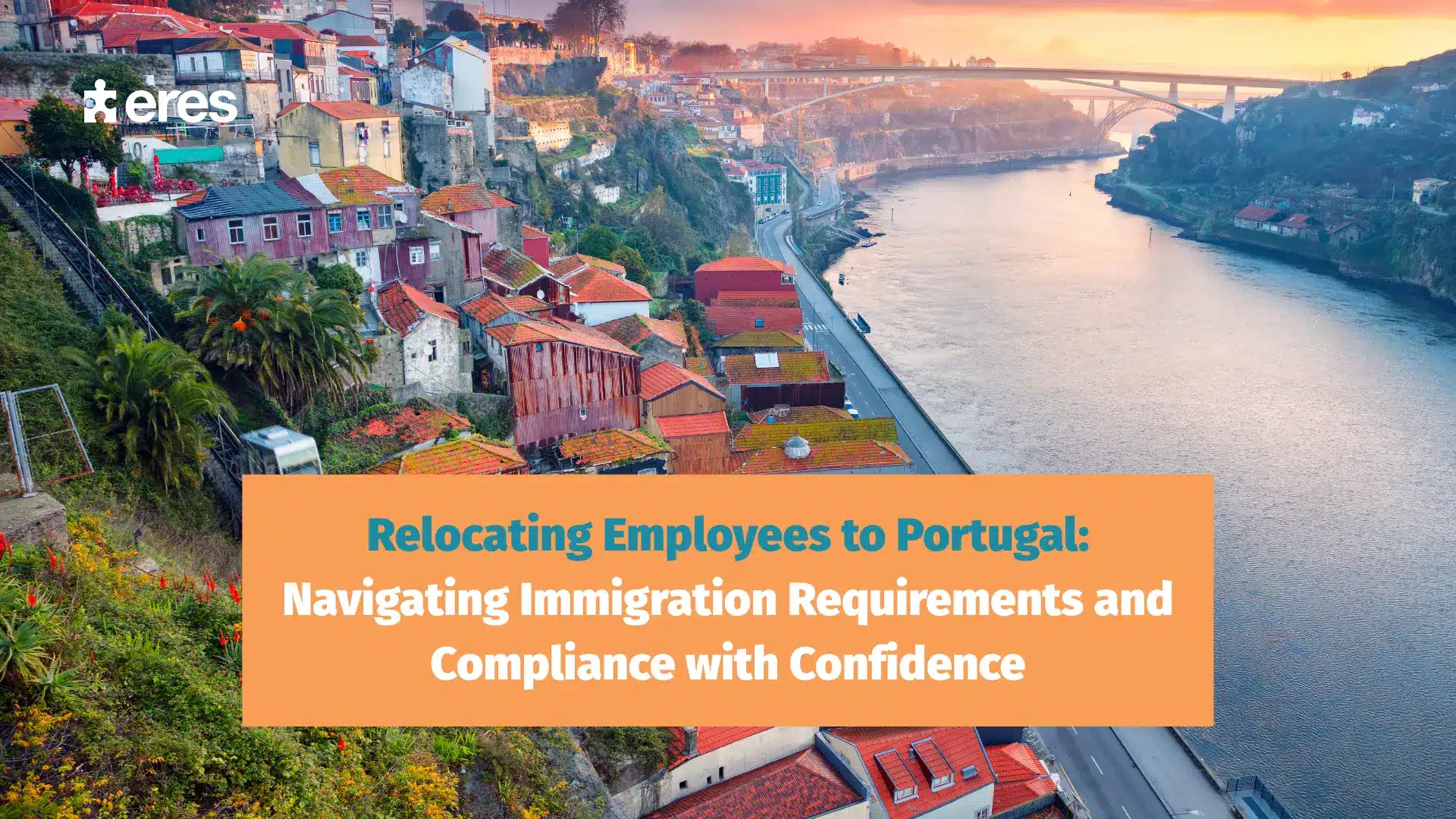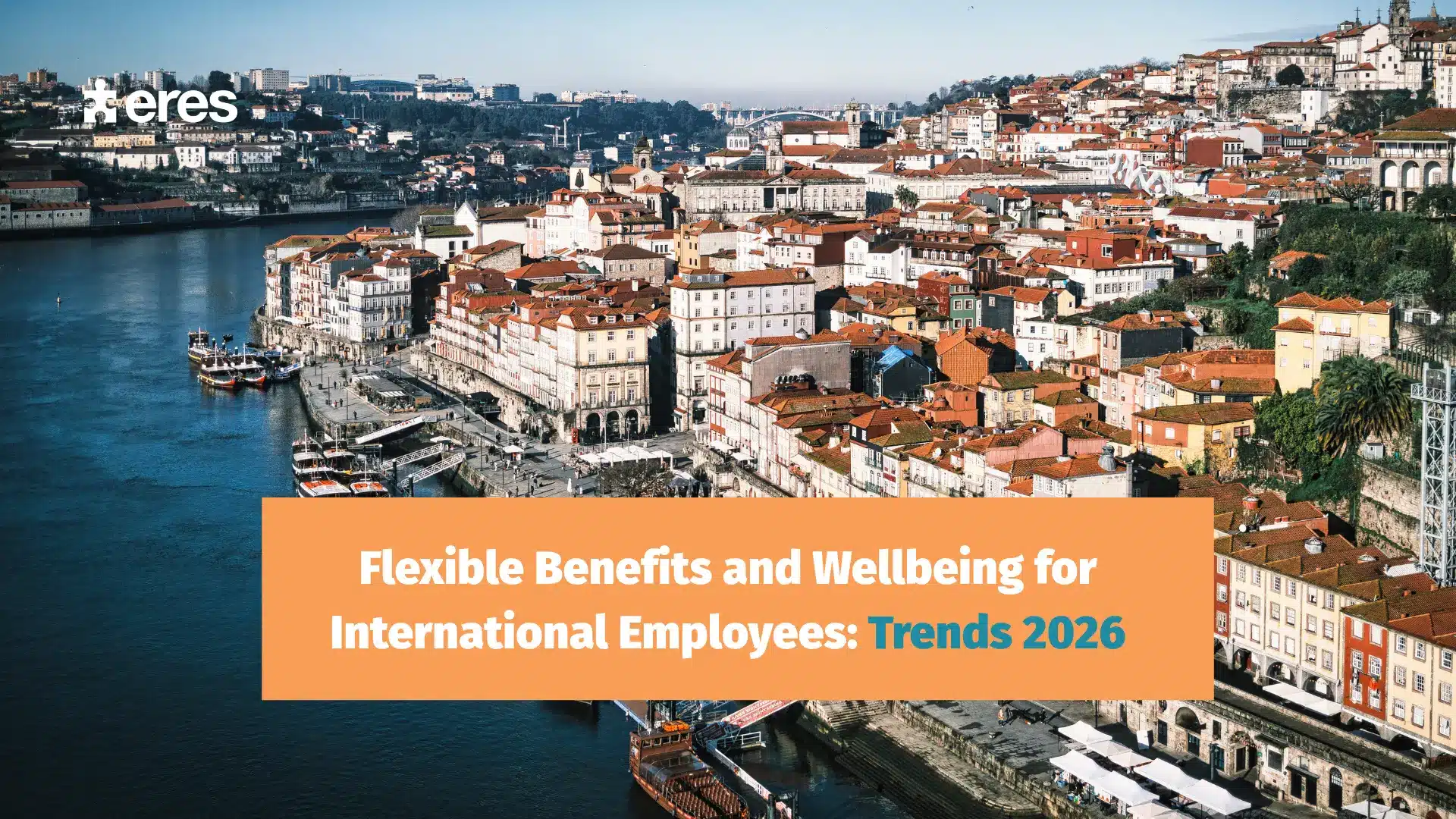
Portugal has been on relocation shortlists for years, and it is still there. The reasons are not a single headline: safety, a stable economy, a lifestyle that employees genuinely ask for, a dedicated tax regime for qualified professionals and a growing international community in Lisbon, Porto and beyond. At the same time, Portugal is not a frictionless destination. Housing has become expensive, immigration processing has been unpredictable, and the rules for foreign nationals changed in 2025.
This article looks at what continues to make Portugal stand out as a talent destination in 2026, and what HR and mobility teams should plan for so that the attraction translates into smooth moves. It draws on official Portuguese and European sources, recognised indices and recent practitioner commentary. Where a figure comes from a secondary source or may have changed, we say so.
1. Safety and Stability That Employees Notice
Portugal ranks seventh in the 2026 Global Peace Index produced by the Institute for Economics and Peace, which assesses 163 countries and territories. According to Portugal Global, the national trade and investment agency, it has held that position since 2023 and has stayed in the top ten for several years. The index measures conflict, societal safety and security, and militarisation, so it is a useful proxy for the day-to-day safety and political stability that families weigh when deciding whether to relocate.
For employers, this matters in practice. Safety and stability are consistently among the first questions assignees and their partners ask, and they are easier to answer when an independent index backs the response. A high ranking does not mean no risks in any particular neighbourhood, so it should support, not replace, local briefing.
2. A Resilient Economy
Portugal’s economic outlook has remained comparatively steady. The Bank of Portugal’s October 2026 bulletin projects GDP growth of 2.3% in 2026 and 1.8% in 2027, with inflation of around 3.1% in 2026. The European Commission’s spring forecast was more cautious, at about 1.7% growth for 2026, and Statistics Portugal (INE) reported year-on-year GDP growth of 2.5% in the second quarter of 2026. Forecasts differ by institution and are revised often, so use them as context rather than a promise.
For a company deciding where to place talent, a growing economy with a well-educated workforce and an active startup and services sector supports both hiring and retention. It also means competition for skilled people inside Portugal, which affects compensation planning for local-plus and relocated roles.
3. Quality of Life and Expat Satisfaction
Employees who have actually moved tend to rate Portugal well. In InterNations’ Expat Insider 2026 survey, Portugal ranked 8th out of 31 destinations. Quality of life, climate, leisure options and a friendly local population usually feature strongly in expat feedback on Portugal, while housing and the administration of residence matters are the more frequent complaints. We recommend checking the sub-index results on the InterNations site, since they show where Portugal performs best and where employees tend to struggle.
The practical lesson is to design the relocation package around both sides of that picture: promote the lifestyle, and invest in housing search and administrative support so that the first months do not undermine it.
4. A Tax Regime Aimed at Qualified Professionals
Portugal replaced its well-known Non-Habitual Resident (NHR) regime for most new applicants with the IFICI regime, often described as NHR 2.0 (the incentive for scientific research and innovation). In summary, according to the Portuguese tax authority and practitioner guides, it offers a reduced flat personal income tax rate of 20% for up to ten years on Portuguese-source income from eligible high-value activities, for people who have not been Portuguese tax residents in the preceding five years. Eligibility depends on the activity and the employer, and registration with the tax authorities is required.
Because eligibility, documentation and deadlines are technical, employers should not promise a tax outcome in an offer letter. A prudent approach is to make the offer conditional on tax advice, ask the employee to take advice early, and confirm the current rules with a Portuguese tax adviser before the move, since the regime and its interpretation can be updated.
5. Immigration: Attractive Routes, Less Predictability
Portugal offers several routes for working professionals, including work visas, the EU Blue Card for highly qualified roles and the D8 digital nomad visa for remote workers. At the same time, the framework tightened in 2025. Law 61/2025 amended the foreigners law, and practitioners report changes affecting the expression-of-interest route, family reunification conditions and the way job-seeker and skilled-worker routes operate. We recommend checking the current text and the specific route for each case, because transitional rules and exceptions apply.
Processing is the other issue. Commentary from the International Bar Association points to unpredictability at AIMA, the agency responsible for foreigners and asylum, with timelines that can vary widely. We have also seen reports that the European Commission opened an infringement procedure against Portugal on 15 July 2026 over the transposition of the Single Permit Directive (Directive (EU) 2024/1233). We have not been able to confirm the details in the Commission’s official database, so treat that point as something to verify before relying on it. For HR, the safest planning assumption is that timelines can slip: build buffer into start dates and avoid committing to a fixed arrival date before the permit is secured.
6. Housing: Cooling, but Still Demanding
Housing is the area where Portugal’s popularity has a visible cost. According to Portugal Resident, citing Expresso, rents in Lisbon have largely flattened and Porto has recorded several consecutive quarters of decline, with a 1.3% year-on-year drop in new rental contracts in the first quarter of 2026. The same report says the number of homes available to rent rose by 12.2% year-on-year in Lisbon and 19.8% in Porto in that quarter, but rents remain close to 2023 levels and almost double those of a decade ago.
CBRE reports average rents of about EUR 14.38 per square metre per month in Lisbon and EUR 10.13 in Porto in the first quarter of 2026, with rents described as broadly stabilised, while purchase prices continued to rise. INE data cited in the press shows the picture varies by measure: the median rent on new contracts and the rent index covering all existing contracts do not move in the same way. For relocation planning, that means ranges rather than single figures, and a housing search strategy that allows for competition for good properties in central areas.
Practical steps: offer temporary housing for the first weeks, look at well-connected areas outside the city centre, and ask whether the landlord will accept the documents the employee can provide before a Portuguese tax number and bank account are in place.
7. Beyond Lisbon and Porto
Many companies still default to Lisbon and Porto, but the lower-cost cities and the surrounding regions can be attractive for employees who value space and a calmer pace. Practitioner commentary suggests that cities such as Leiria or Aveiro may offer noticeably lower rents, though this is a general observation and not a measured benchmark. When a role can be hybrid or remote, widening the location options can ease housing pressure and widen the talent pool.
What Makes Portugal Work for Relocation: A Summary Checklist
- Use safety, stability and quality of life as part of the offer, backed by independent sources.
- Make tax statements conditional on advice from a Portuguese tax adviser.
- Confirm the immigration route and its current rules, including the 2025 changes, before the offer is finalised.
- Build buffer into start dates for AIMA and visa processing.
- Provide temporary housing and support with the long-term search.
- Review family reunification conditions early if the employee is moving with dependants.
- Consider locations beyond Lisbon and Porto.
Common Pitfalls to Avoid
- Promising a tax rate or regime in an offer letter without tax advice.
- Setting a fixed start date before the permit is approved.
- Relying on information about the pre-2025 immigration rules.
- Underestimating housing search time in central Lisbon and Porto.
- Assuming family members will be able to join on the same timeline.
- Treating one rent figure as the market rate without checking the source and the date.
How Eres Relocation Helps
Eres Relocation supports companies that want to benefit from what Portugal offers while avoiding the usual friction. Working with immigration and tax counsel, we help HR teams choose the right route, plan realistic timelines, secure temporary and long-term housing, organise the administrative steps after arrival, and support families with schools and daily life. The aim is to let employees enjoy the reasons they chose Portugal, with fewer surprises along the way.
Planning a move to Portugal? Contact Eres Relocation to talk through your timeline and how a coordinated approach can reduce delays.
Disclaimer: This article is provided for general informational purposes only and does not constitute legal, tax, immigration, or financial advice. Portuguese immigration rules, tax regimes, processing times and housing figures change frequently and may not reflect the most current information; several points are based on secondary sources and should be verified with the competent authorities. For guidance specific to your organization’s or employee’s situation, please consult a qualified immigration, tax, or relocation professional or contact us directly.