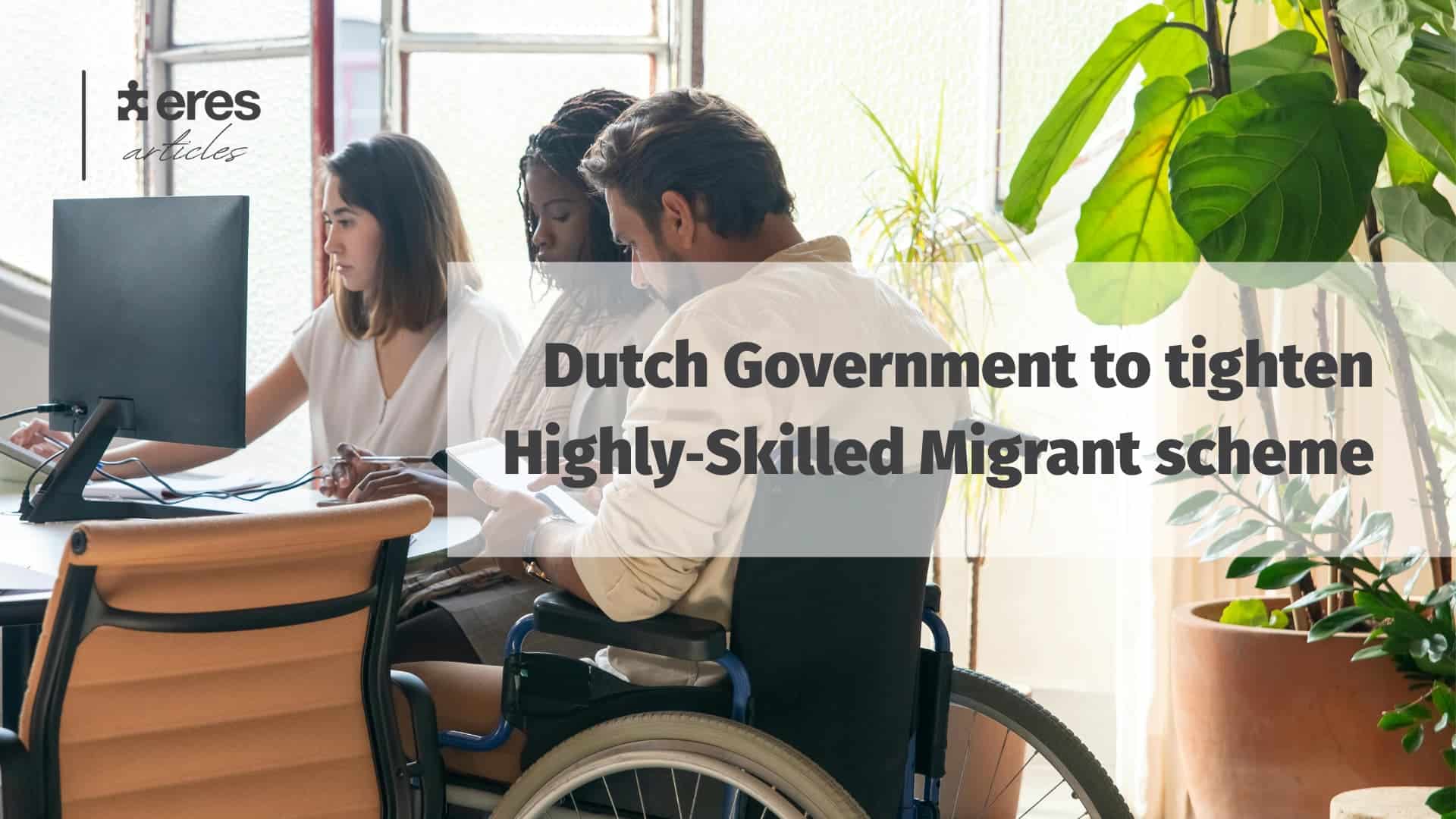
The Dutch cabinet has announced substantial reforms to the Highly‑Skilled Migrant Scheme (kennismigrantenregeling), aiming to attract genuinely scarce international knowledge workers while curbing misuse. The proposed changes focus on tightened salary thresholds, more stringent conditions for “authorised sponsor” status, and stricter enforcement of the market‑conformity test.
Stricter Requirements for Authorised Sponsors
Companies must now meet higher standards in financial stability and governance to register with the Immigration and Naturalisation Service (IND). Even employers in operation for over 18 months are being scrutinised more rigorously. Additionally, sponsorship status may be revoked after just two consecutive years without employing or applying for highly‑skilled migrants, down from the current three‑year threshold.
Increased Salary Thresholds
To prevent abuse, minimum salary levels will rise for key groups:
- Under 30 or recent graduates: Minimum monthly salary proposed at €4,551 (1.1× average gross annual salary), up from €4,171.
- Recent graduates: May need to earn the actual average starting graduate salary (~€3,373 bachelor / €4,231 master) instead of the current minimum of €2,989.
- Over 30: Salary requirement remains at ~€5,688 per month, aligned with EU Blue Card levels.
Lower thresholds may be time‑limited—for recent graduates, possibly only valid for up to three years post‑graduation, even if they switch employers.
Stronger Application of Market Conformity Test
The test that checks whether offered salaries match the job’s market rate will be enforced more strictly. Higher salaries solely used to meet thresholds may be rejected.
Why These Changes Matter
- Ensures the scheme serves its original purpose: attracting truly scarce, highly skilled international talent.
- Deters misuse—such as rapid salary manipulation, payrolling schemes, or temporary staff exploitation—with safeguards including limitations on secondary employer‑payroll arrangements and the 30% tax ruling.
- Requires employers to reassess compensation and hiring strategies, particularly for younger and recent graduate employees.
For more valuable insights on related Dutch immigration topics, check out our blog on “Updates on the Dutch 30% Ruling: What Employers and Employees Need to Know.
Implementation Roadmap
These proposals are still under legislative consideration. Key steps include:
- Advice and assessment by the Social and Economic Council (Sociaal-Economische Raad, SER)
- Adjustment via General Administrative Order for some elements (with at least one year implementation notice)
- A formal law amendment for conditions like reintroducing “inactivity” as grounds to revoke sponsorship status.
Employers should review:
- Compensation structures for migrating staff under 30 or recent graduates
- Existing contracts in light of the new criteria
- Current status of “authorised sponsor” recognition and renewal strategy
Do you want to know how these changes could impact your business or future plans in the Netherlands?
At Eres Relocation Netherlands, our team of immigration experts is here to support you every step of the way.
📩 Contact us today to ensure full compliance and a smooth transition.